Earwax, also known as cerumen, is a sticky substance secreted by glands in the ear canal of humans and other mammals. It plays an important role in your body by stopping foreign particles from entering the ears. Earwax actually serves as a natural self-cleaner, so it is typically unnecessary to safely clean your ears yourself. In addition, ear wax:
Protects the ear from dust, and debris
Contains antibacterial properties to prevent infections
Keeps the ear canal lubricated and therefore prevents the skin from flaking and drying out
Ways to Safely Clean Your Ears
Although ear wax serves an important function in our body, sometimes ear wax can build up in our ear canals or outer ears. Here are some ways to safely clean your ears at home:
Damp Cloth
Use a washcloth with lukewarm water and soap to clean the outer part of your ear.
Syringe
You may also use a syringe to irrigate your ears, which can rinse out the wax in your ear. This method is most effective when you use a type of wax softener 15 to 30 minutes before irrigating. You can find an over the counter wax softener that is designed for this purpose, or you can apply baby oil or mineral oil using an eyedropper.
Regardless of whether you irrigate your ears or gently wash them with a damp towel, it is important to thoroughly dry your ears with a clean, dry cloth after cleaning them.
Ear-Cleaning Habits to Avoid
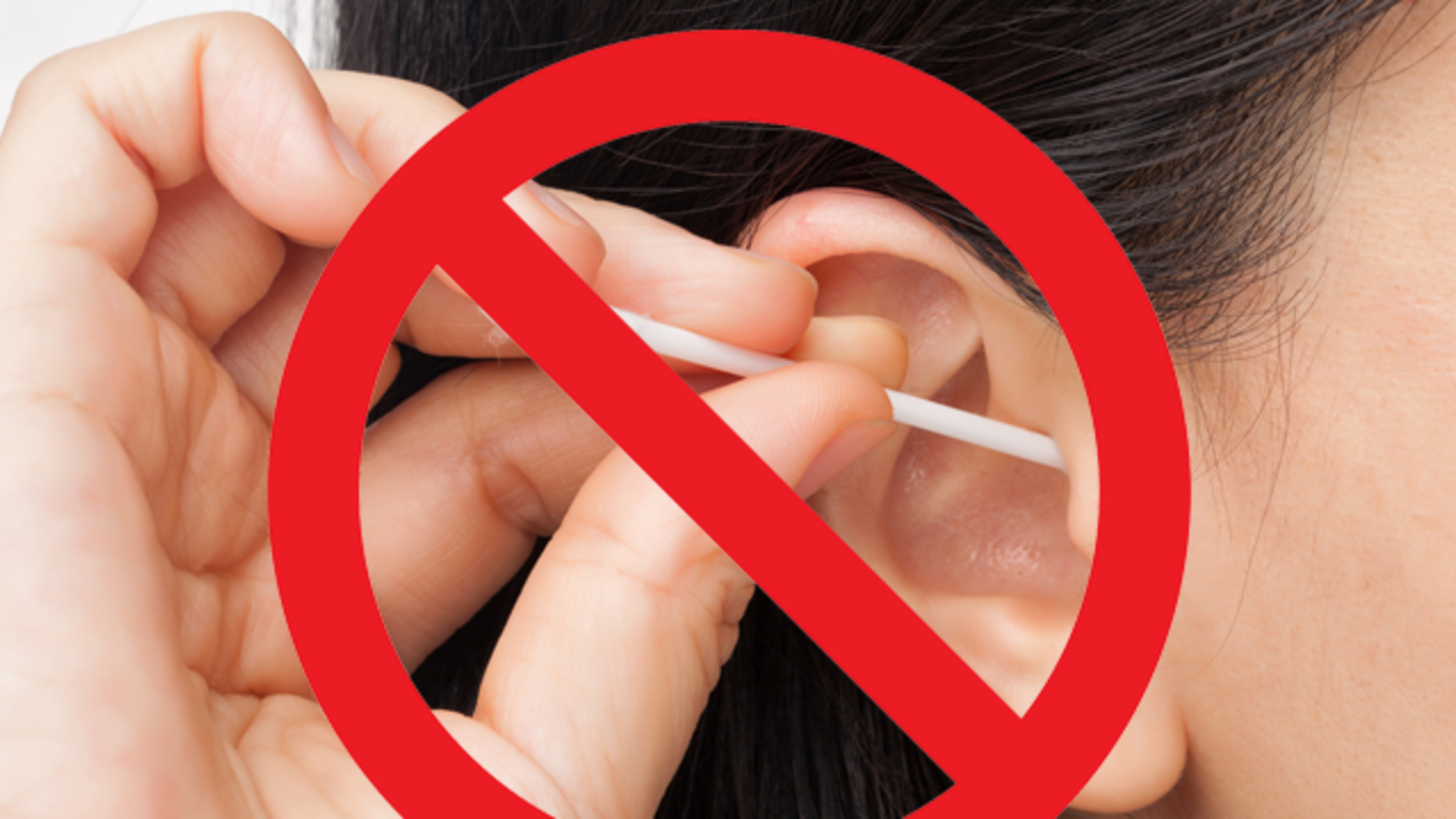
It is very important to remember to never put anything directly into your ear, such as small items like bobby pins, pens, or Q-tips. These items can push ear wax further into your ear canal and can cause considerable damage to your eardrums.
You can also protect your ears by:
Removing any water after you swim to prevent swimmer’s ear from developing
Limit your exposure to loud noises
Monitor any hearing changes you may experience, especially if you are taking medications
Take breaks from your headphones
Know When to See Your Doctor
If you have a hole in your eardrum, have ever had ear surgery, or are experiencing intense ear pain, you should never attempt to clean your ear yourself. It may be time to visit an Ear, Nose, and Throat (ENT) specialist at the Sahasra ENT Clinic if you are experiencing the following symptoms:
Earache
Feeling of fullness in the affected ear
Tinnitus: ringing in the ear
Decreased hearing
Dizziness
Dr Sriharsha, the otolaryngologist, specializes in ear and sinus diseases and may be able to help you with any ear blockages or infections that you have. Contact 98857 45454 to schedule your appointment
A blocked or stuffy nose can be very painful and uncomfortable and is usually the result of nasal congestion. Nasal congestion occurs when the nasal cavity becomes clogged with excess mucus, often due to an allergic response or infection. The blockage prevents you from breathing through the nose and forces you to inhale through the mouth instead. Fortunately, there are numerous home remedies that you can try for a blocked nose.
Tips to Relieve a Stuffy Nose
Use a Humidifier
A humidifier is a device that adds moisture to the air and is typically used in the winter to keep nasal passages moist. The moisture in the air from the humidifier helps to loosen up secretion in your sinuses and unblock your nose. Preventing your nasal passages from getting too dry also helps prevent nose bleeds.
Try Nasal Irrigation
Nasal irrigation is the act of using water to gently rinse out or wash your nasal passages in order to relieve congestion. Nasal irrigation can be accomplished by a few different methods, including a neti pot. A neti pot is an inexpensive device, similar to a small teapot, which can be used to rinse the sinuses and nasal passages with a saline solution. This method is particularly effective for those with allergies or chronic sinusitis.
Take a Hot Shower
If you are seeking immediate relief for a blocked nose, taking a hot shower can help relieve congestion by opening up the air passages in your throat and chest. This method helps alleviate congestion due to the inhalation of steam, which can loosen mucus in your nasal passages and soothe inflamed blood vessels in your sinuses.
Use a Saline Nasal Spray
Saline nasal sprays help reduce inflammation and cleanse your nasal passages of all secretion. Saline sprays are available at most local pharmacies, and some contain decongestant medication. Talk to your doctor or pharmacist about what saline spray may be right for you.
Take Antihistamines or Allergy Medications
Antihistamine medications are designed to help stop the production of histamine, which is a chemical that causes allergy symptoms. Both antihistamines and allergy medications can reduce inflammation in your nasal passages, helping you to unblock your nose. Some antihistamines are available over-the-counter, while others may require a prescription from a doctor.
Inhale Essential Oils
A more alternative form of treatment, inhaling essential oils like eucalyptus and peppermint oils offer a myriad of benefits. These oils may reduce inflammation, ward off bacteria, and relieve sinus congestion.
Drink Tea
Drinking hot tea has numerous benefits, especially if you are congested or suffering from flu-like symptoms. Tea is able to fight off inflammation and can help thin mucus in your nasal passageways, making it easier to breathe. Additionally, tea is a great source of antioxidants and may boost your immune system.
Contact Ear & Sinus Institute
Although nasal congestion will often subside on its own, a blocked nose that persists for longer than seven to ten days may require a visit to the doctor. If you are struggling with nasal congestion or any other problem with your sinuses, contact a specialist at Sahasra ENT Clinic or call us at 98857 45454
Snoring is the resulting sound that occurs due to obstructed air movement during breathing while you are asleep. In some cases, the sound may be soft, but in other cases, it can be loud and unpleasant.
Snoring during sleep may be a sign of obstructive sleep apnea (OSA).
What Are The Symptoms Of Snoring?
It is important to understand that snoring is a medical condition that deprives the body of appropriate rest. Aside from the audible sounds of snoring, there are several symptoms that may indicate a chronic snoring problem. These include:
Excessive daytime sleepiness
Difficulty concentrating
Sore throat
Restless sleep
Gasping or choking at night
High blood pressure
Chest pain at night
Noise during sleep
What Causes Snoring?
Snoring is caused by many factors. When you are sleeping, the muscles in the roof of your mouth, known as the soft palate, tongue and throat relax. Sometimes the tissues in your throat can relax so much that they partially block your airway and in turn, vibrate.
The main factors that contribute to snoring include:
Your mouth anatomy: Having a low, thick soft palate can narrow your airway. People who are overweight may have extra tissues in the back of the throat that may narrow their airways. Additionally, if the uvula is elongated, airflow can be obstructed and vibration increased.
Alcohol consumption: Consuming alcohol before bedtime can also cause snoring. Alcohol relaxes the throat muscles and decreases the natural defences against airway obstruction.
Nasal problems: Chronic nasal congestion or a deviated septum may contribute to your snoring.
Sleep apnea: Snoring also may be associated with obstructive sleep apnea (OSA). This is a serious condition in which your throat tissues partially or completely block your airway during sleep, preventing you from breathing.
The good news is that for many people, snoring can be treated with minimally invasive procedures that are routinely performed in an office setting, allowing patients to return to normal activity that day.
Treatment options depend upon the source and site of your obstruction(s).
What Snoring Can Do To You
Snoring can interrupt a good night’s sleep both due to the noise and to the increased difficulty you can have with breathing, as snoring is often an indicator of a serious disorder called obstructive sleep apnea. If you are the one doing the snoring, the constant interruption of your sleep can result in several physical effects, including:
Daytime drowsiness
Increased blood pressure
Increased risk of neurological and cardiovascular problems including irregular heartbeat, stroke, and heart attack
You can also experience significant emotional and psychological issues too, such as:
Moodiness
Irritability
Poor decision-making skills
Memory loss
Inability to concentrate
But it’s not just the snorer who is impacted by the health risks of snoring. The bed partner of the snorer can also experience the physical, emotional and psychological effects because his or her sleep is interrupted too. Relationships often become a third victim of snoring, putting a partnership onto a rocky road:
It can force you to sleep in separate bedrooms
The moodiness and irritability can result in more fights
Your sex life can be negatively impacted
Adults are not the only ones at risk. Children who snore or who live with a snoring parent that disturbs their sleep often experience:
Poor concentration in school and poor academic progress
Issues with proper growth
When You Know You Need Treatment, You Have Options
The Snoring and Sleep Institute of Atlanta offers a wide range of non-invasive and minimally invasive treatments performed right inside the doctor’s office that are designed to target and treat the root cause(s) of your snoring problem. Treatments offered include:
Oral appliance therapy moves your tongue or jaw into a position that allows you to get more air as you sleep
Base of tongue ablation, turbinate reduction and tonsillectomy are all procedures that reduce the amount of tissue that may be blocking or sagging into your airways (both your throat and your nose)
The Pillar Procedure helps stiffen the soft palate, keeping the excess tissue from blocking your airway as you sleep
If you think snoring is creating issues for you or your loved ones, contact our sleep specialist Dr Sriharsha Tikka at the Sahasra ENT Clinic, Madhapur. The health risks of snoring are too severe to ignore, so get an evaluation as soon as you can. You’ll be happy you did, especially when you finally get the restful and restorative sleep you’ve been missing.
5 Tips To Stop Snoring
The cause behind your snoring will determine what you can do to reduce or eliminate the problem. Here are several tips that may help alleviate your symptoms:
Change your sleeping position – Sleeping on your back is the worst position for snoring. With your head back, the tissues in your throat, including the tongue and the uvula, are subject to gravity pulling them down. This results in a greater likelihood that the airway will become obstructed. Changing your sleep position to your side to redirect the force of gravity is a good first step to improving symptoms.
Treat nasal congestion at the first signs – By treating nasal congestion early, you make it possible to keep the air flowing freely through your nose. This eliminates the airway becoming partially obstructed by phlegm. For some people, this may mean regular use of allergy medicine or an expectorant to thin mucus during cold and allergy seasons.
Avoid snoring stimulators – Snoring stimulators include sleeping aids, alcohol or eating too close to bedtime. Alcohol and sleeping aids both cause muscles to relax, leading to things like a limp tongue or sagging soft tissues in the throat. Relaxed muscles result in your body’s compromised ability to keep the airway clear. In addition, eating causes the stomach to expand, lessening room for the lungs to expand and increasing the chance of acid coming back up into the throat and blocking airflow.
Lose weight – Maintaining a healthy weight through diet and exercise has many benefits, and lessening your chance of snoring is one of them. Losing weight will help reduce the excess tissue within your throat and less weight and more exercise also helps breathing ability.
Consult a specialist – In the past, chronic snorers and sleep apnea sufferers were stuck with bulky CPAP machines as the primary mode of treatment. This is no longer the case. An Atlanta sleep specialist can offer minimally invasive, treatments that may eliminate the problem causing the snoring in just one office visit. Treatments available at the Sahasra ENT Clinic are customized to your particular needs.
4 Things To Consider When Selecting A Snoring Doctor In Hyderabad
Many different types of medical professionals promote themselves as “snoring specialists,” but the reality is that snoring is often much more than a sound – it can be a symptom of an underlying sleep disorder called obstructive sleep apnea. For this reason, seeing a medical professional who merely treats the symptoms of snoring may not actually solve your problem. Rather, you need to seek out a doctor who is experienced in diagnosing and treating the root cause of your condition.
1) Does The Doctor Diagnose & Treat Both Snoring And Sleep Apnea?
Chronic snoring is one telltale sign indicating the presence of obstructive sleep apnea – a serious sleep disorder that can have many adverse consequences for both your physical and emotional health. As you look for a snoring doctor in Hyderabad, be sure to look for one that treats both snoring and obstructive sleep apnea. This way, you can be sure that you’ll have the right level of care and expertise if the physician suspects you have sleep apnea and wants to have you tested for it. This will also ensure that you have access to the right treatments – whether it’s simply snoring or something more.
2) Does The Doctor Emphasize A Customized Approach?
Each case of snoring is unique. If the doctor you find is determined that one particular treatment is a cure-all for snoring, the odds are that this physician is not right for your needs. Look for a doctor who insists on doing a thorough evaluation and medical history before he or she makes a suggestion for treatment. Only after a proper evaluation will a doctor be able to identify the underlying cause of your snoring and tailor a custom treatment plan based on your needs.
3) Does The Doctor Offer A Wide Variety Of Treatment Offerings?
Since there are numerous possible causes of snoring and these causes will vary from patient to patient, it is crucial that treatment be designed to meet a patient’s unique needs in order to be effective. In the same vein, it’s important that you see a snoring doctor in Atlanta who offers a wide variety of treatment options – and one who does not solely offer continuous positive airway pressure (CPAP) therapy, which has long been the traditional treatment for snoring and sleep apnea. If you are already a CPAP user and among the many patients who cannot tolerate or are non-compliant with this treatment option, the available CPAP alternative treatments will be especially important in your doctor search.
4) Does The Doctor Provide The Latest Technology And Minimally Invasive Procedures?
Another important element to consider beyond the variety of treatments offered is the type of treatments provided and whether or not this includes the latest technology and minimally invasive procedures. At practices such as the Sahasra ENT Clinic, you will find not only CPAP alternative treatments, but also the latest minimally invasive procedures that can be performed right in the office with little or no downtime.
Looking For The Best Snoring Doctor In Hyderabad?
While there are many important factors to consider when selecting the best place for snoring treatment, fortunately, there is a practice in Madhapur, Hyderabad that provides all of these elements. Our otolaryngologist, Dr Sriharsha Tikka, at the Sahasra ENT Clinic differentiates himself from other snoring doctors in Hyderabad by providing compassionate care while also delivering all of these distinguishing factors.
So if you’re ready to take the first step to long-term snoring relief with a top snoring doctor in Hyderabad, schedule an evaluation with Dr Sriharsha today. You can get started by calling us at 98857 45454. We look forward to helping you sleep better, snore-free!
Covid-19 is marked by common symptoms like cough, cold, fever, sore throat and fatigue among others. However, there are also several non-respiratory symptoms like headache, loss of smell and taste, back pain and muscle ache. And now, several patients are experiencing hearing loss or ringing in the ears, which experts have termed as ‘Covid ear’.
“Coronavirus attacks lungs. But, apart from affecting the respiratory system, it also affects the ear, nose and throat. Loss of smell and taste are among the peculiar symptoms of Covid-19. In addition, multiple patients also reported hearing loss along with ringing sounds in the ear, known as tinnitus. This is known as Covid ear,”
“As per researchers, the inner tissue of the human ear contains proteins that are susceptible to attack by the SARS-CoV-2 virus. Thus, our ear may also show signs in the form of loss of balance or tinnitus.”
Symptoms
Further, the experts listed a few symptoms that indicate you might be experiencing Covid ear.
*Loss of hearing *Tinnitus *Loss of balance *Ear pain
Drink enough water to keep symptoms at bay. These symptoms are common “due to body-wide inflammation and common involvement of ENT in Covid-19 patients”.
How long can it last?
The persistence of Covid ear depends on the severity of symptoms. “Mild symptoms can recover over a short period of time (7-14 days). Severe imbalance or hearing loss can take a longer time to recover,”
Patients should consult an ENT specialist in case of severe symptoms.
Here’s what you can do
If you are experiencing Covid ear, here’s what you can do, as suggested by the expert.
*Treat fever with over-the-counter medicines (antipyretics). *Stay hydrated. *Eat well and get plenty of rest. *Soothe your cough and sore throat with honey or over-the-counter cough medicines. *Get medical help if symptoms increase.
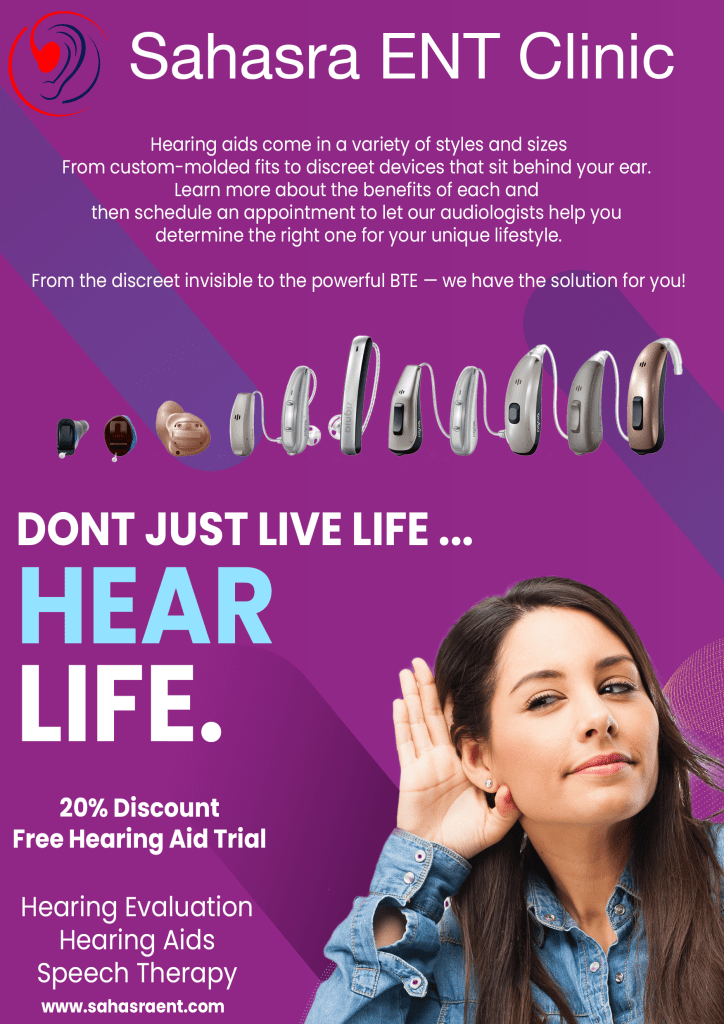
Perhaps you’ve thought about getting a hearing aid, but you’re worried about how it will look or whether it will really help. It may help ease your concerns to know more about:
The hearing aid options available to you
What to look for when buying a hearing aid
How to get used to a hearing aid
Hearing aids can’t restore normal hearing. They can improve your hearing by amplifying sounds that you’ve had trouble hearing.
How do hearing aids work?
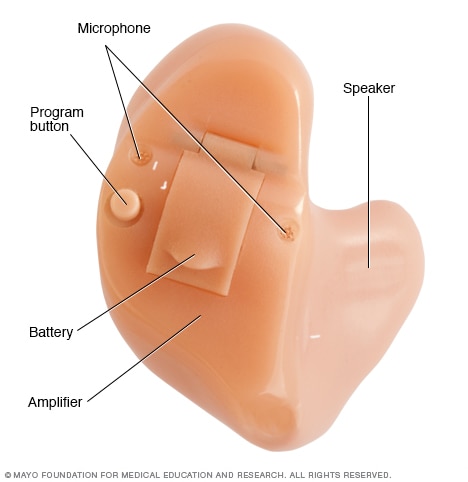
All hearing aids use the same basic parts to carry sounds from the environment into your ear and make them louder. Most hearing aids are digital, and all are powered with a traditional hearing aid battery or a rechargeable battery.
Small microphones collect sounds from the environment. A computer chip with an amplifier converts the incoming sound into digital code. It analyzes and adjusts the sound based on your hearing loss, listening needs and the level of the sounds around you. The amplified signals are then converted back into sound waves and delivered to your ears through speakers, sometimes called receivers.
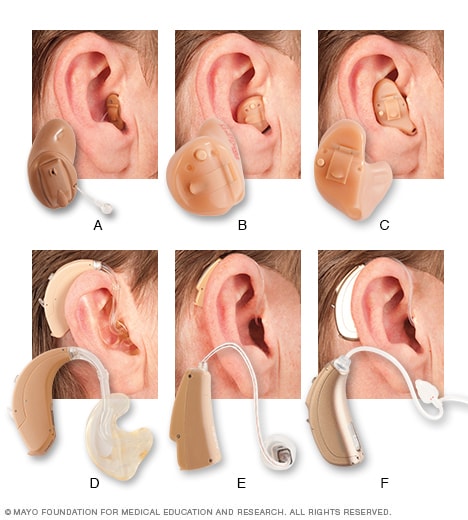
Hearing aid styles
Common hearing aid styles Hearing aid styles
Hearing aids vary a great deal in price, size, special features and the way they’re placed in your ear.
The following are common hearing aid styles, beginning with the smallest, least visible in the ear. Hearing aid designers keep making smaller hearing aids to meet the demand for a hearing aid that is not very noticeable. But the smaller aids may not have the power to give you the improved hearing you may expect.
Completely in the canal (CIC) or mini CIC A completely-in-the-canal hearing aid is molded to fit inside your ear canal. It improves mild to moderate hearing loss in adults.
A completely-in-the-canal hearing aid:
Is the smallest and least visible type Is less likely to pick up wind noise Uses very small batteries, which have shorter life and can be difficult to handle Often doesn’t include extra features, such as volume control or a directional microphone Is susceptible to earwax clogging the speaker In the canal An in-the-canal (ITC) hearing aid is custom molded and fits partly in the ear canal. This style can improve mild to moderate hearing loss in adults.
An in-the-canal hearing aid:
Is less visible in the ear than larger styles Includes features that won’t fit on completely-in-the-canal aids, but may be difficult to adjust due to its small size Is susceptible to earwax clogging the speaker In the ear An in-the-ear (ITE) hearing aid is custom made in two styles — one that fills most of the bowl-shaped area of your outer ear (full shell) and one that fills only the lower part (half shell). Both are helpful for people with mild to severe hearing loss and are available with directional microphones (two microphones for better hearing in noise).
An in-the-ear hearing aid:
Includes features that don’t fit on smaller style hearing aids, such as a volume control May be easier to handle Uses a larger battery for longer battery life, with several options for rechargeable batteries Is susceptible to earwax clogging the speaker May pick up more wind noise than do smaller devices Is more visible in the ear than smaller devices Behind the ear A behind-the-ear (BTE) hearing aid hooks over the top of your ear and rests behind the ear. A tube connects the hearing aid to a custom earpiece called an ear mold that fits in your ear canal. This type is appropriate for people of all ages and those with almost any type of hearing loss.
A behind-the-ear hearing aid:
Traditionally has been the largest type of hearing aid, though some newer mini designs are streamlined and barely visible Has directional microphones Is capable of more amplification than are other styles May pick up more wind noise than do other styles May be available with a rechargeable battery Receiver in canal or receiver in the ear The receiver-in-canal (RIC) and receiver-in-the-ear (RITE) styles are similar to a behind-the-ear hearing aid with the speaker or receiver that sits in the ear canal. A tiny wire, rather than tubing, connects the piece behind the ear to the speaker or receiver.
A receiver-in-canal hearing aid:
Typically has a less visible behind-the-ear portion Has directional microphones Has manual control options May be available with rechargeable battery Is susceptible to earwax clogging the speaker Open fit An open-fit hearing aid is a variation of the behind-the-ear hearing aid with a thin tube or the receiver-in-the-canal or receiver-in-the-ear hearing aid with an open dome in the ear. This style keeps the ear canal very open, allowing for low-frequency sounds to enter the ear naturally and for high-frequency sounds to be amplified through the hearing aid. This makes the style a good choice for people with better low-frequency hearing and mild to moderate high-frequency hearing loss.
An open-fit hearing aid:
Is often visible Doesn’t plug the ear like the in-the-ear hearing aid styles, often making your own voice sound better to you May be more difficult to insert into the ear due to the noncustom dome Additional features Some optional features of hearing aids improve your ability to hear in specific situations:
Noise reduction. All hearing aids have some amount of noise reduction available. The amount of noise reduction varies. Some also offer wind noise reduction. Directional microphones. These are aligned on the hearing aid to provide for improved pickup of sounds coming from in front of you with some reduction of sounds coming from behind or beside you. Some hearing aids are capable of focusing in one direction. Directional microphones can improve your ability to hear when you’re in an environment with a lot of background noise. Rechargeable batteries. Some hearing aids have rechargeable batteries. This can make maintenance easier for you by eliminating the need to regularly change the battery. Telecoils. Telecoils make it easier to hear when talking on a telecoil-compatible telephone. The telecoil reduces the sounds from your environment and picks up the sounds from the hearing-aid-compatible telephone. Telecoils also pick up signals from public induction loop systems that can be found in some churches and theaters, allowing you to hear a speaker, play or movie better. Wireless connectivity. Increasingly, hearing aids can wirelessly interface with certain Bluetooth-compatible devices, such as cellphones, music players, computers and televisions. You may need to use an intermediary device to pick up the phone or other signal and send it to the hearing aid. Remote controls. Some hearing aids come with a remote control, so you can adjust features without touching the hearing aid. Some hearing aids connect wirelessly to a cellphone and have a cellphone application that allows use of the cellphone as a remote control. Direct audio input. This feature allows you to plug in to audio from a television, a computer or a music device with a cord. Variable programming. Some hearing aids can store several preprogrammed settings for various listening needs and environments. Synchronization. For an individual with two hearing aids, the aids can be programmed to function together so that adjustments made to a hearing aid on one ear (volume control or program changes) will also be made on the other aid, allowing for simpler control.
Before you buy When looking for a hearing aid, explore your options to understand what type of hearing aid will work best for you. Also:
Get a checkup. See your doctor to rule out correctable causes of hearing loss, such as earwax or an infection. And have your hearing tested by a hearing specialist (audiologist). Seek a referral to a reputable audiologist. If you don’t know a good audiologist, ask your doctor for a referral. An audiologist will assess your hearing, help you choose the most appropriate hearing aid and adjust the device to meet your needs. If you have hearing loss in both ears, you will get best results with two hearing aids. Ask about a trial period. You can usually get a hearing aid with a trial period. It may take you a while to get used to the device and decide if it’s right for you. Have the dispenser put in writing the cost of a trial, whether this amount is credited toward the final cost of the hearing aid and how much is refundable if you return the hearing aid during the trial period. Think about future needs. Ask whether the hearing aid you’ve chosen is capable of increased power so that it will still be useful if your hearing loss gets worse. Hearing aids do not function indefinitely, but they should last about five years. Check for a warranty. Make sure the hearing aid includes a warranty that covers parts and labor for a specified period. Some dispensers may include office visits or professional services in the warranty. Beware of misleading claims. Hearing aids can’t restore normal hearing or eliminate all background noise. Beware of advertisements or dispensers who claim otherwise. Plan for the expense. The cost of hearing aids varies widely — from about Rs10,500 to more than a few Lakh rupees each. Professional fees, remote controls, hearing aid accessories and other hearing aid options may cost extra. Talk to your audiologist about your needs and expectations.
Some private insurance policies cover part or all of the cost of hearing aids — check your policy to be sure. Medicare doesn’t cover the cost of hearing aids for adults. In many states, private insurers are required to pay for hearing aids for children. Medical assistance covers hearing aids in most states.
Getting used to your hearing aid Getting used to a hearing aid takes time. You’ll likely notice that your listening skills improve gradually as you become accustomed to amplification. Even your own voice sounds different when you wear a hearing aid.
When first using a hearing aid, keep these points in mind:
Hearing aids won’t return your hearing to normal. Hearing aids can’t restore normal hearing. They can improve your hearing by amplifying soft sounds. Allow time to get used to the hearing aid. It takes time to get used to your new hearing aid. But the more you use it, the more quickly you’ll adjust to amplified sounds. Practice using the hearing aid in different environments. Your amplified hearing will sound different in different places. Seek support and try to stay positive. A willingness to practice and the support of family and friends help determine your success with your new hearing aid. You may also consider joining a support group for people who have hearing loss or are new to hearing aids. Go back for a follow-up. Specialists may include the cost of one or more follow-up visits in their fees. It’s a good idea to take advantage of this for any adjustments and to ensure that your new hearing aid is working for you as well as it can. Your success with hearing aids will be helped by wearing them regularly and taking good care of them. In addition, an audiologist can tell you about new hearing aids and devices that become available. He or she can also help you make changes to meet your needs. The goal is that, in time, you find a hearing aid you’re comfortable with and that enhances your ability to hear and communicate.




 Sahasra ENT Hospital & Research Centre