Earaches can cause debilitating pain, making it difficult to sleep, eat, and drink. The most common cause of ear pain is ear infections. When the ear becomes infected, inflammation and pressure can cause intense pain. However, earaches are not always caused by an ear infection. Other common conditions that cause earaches include:
Air pressure
Earwax buildup
Swimmer’s ear
Skin infections
Allergic reactions
When symptoms of an ear problem are present and do not resolve on their own within a few days, you should speak to a doctor. If an earache is not severe, you may wish to try home remedies to relieve pain. Here are some effective remedies to treat your earache:
Over-the-counter medication
Non-steroidal anti-inflammatory drugs (NSAIDs) can help temporarily reduce the pain of an earache. Common NSAIDs such as ibuprofen, acetaminophen, and aspirin, may control pain associated with a painful type of ear infection called acute otitis media (AOM).
Ear drops
Non-prescription ear drops may help treat mild cases of swimmer’s ear. These can be purchased over the counter or can be made at home. As long as you know that you do not have a punctured eardrum, you can use homemade ear drops. According to ear specialists, a simple at-home blend can be made by mixing 1 part white vinegar to 1 part rubbing alcohol. This at-home blend may help promote drying and prevent the growth of bacteria and fungi that can cause swimmer’s ear.
Cold or warm compresses
You can use ice packs or warm compresses, like a heating pad or warm washcloth, to relieve pain. Simply place the ice pack or warm compress over the ear and alternate between warm and cold after 10 minutes. A cold compress can help numb pain and reduce inflammation, whereas a heating pad may relax the muscles and help improve blood flow.
Massage
A gentle massage in the tender area, as well as any surrounding muscles, can help with ear pain that radiates from the jaw or teeth. Try using a downward motion, applying pressure beginning just behind the ears and down the neck. This massage may help drain excess fluid from the ears.
Ginger
Ginger contains gingerol, a substance with powerful medicinal properties. Ginger’s antibiotic, anti-inflammatory, and pain-relieving properties make it the perfect choice for treating mild earaches. To make ginger juice, you want to cut some fresh ginger into slices and place it into boiling water for about 10-15 minutes. Soak a washcloth in the ginger-infused water and squeeze out the excess. Place this warm towel over the affected ear for 15-20 minutes.
Contact us
If an earache persists for more than 24-48 hours, it is important to seek medical advice. A doctor’s guidance can help someone relieve their symptoms and treat the infection. If you’re experiencing chronic ear pressure or congestion, make an appointment with Dr. Sriharsha Tikka by calling us at 98857 45454
Nothing is worse than feeling congested and unable to breathe out your nose. A stuffy nose and headache are signs of many illnesses, including the common cold. When you’re past the point of having a cold, your symptoms are likely due to two similar conditions: sinusitis or allergic rhinitis.
Although sinusitis and allergic rhinitis have their similarities, these two common culprits associated with nasal congestion aren’t the same thing. Keep reading to explore the differences between allergies and sinus infections so that you can seek the appropriate treatment for relief.
Allergic Rhinitis
Allergic rhinitis, commonly known as hay fever, is a group of symptoms affecting the nose. This condition develops when the body’s immune system recognizes and reacts to something in the environment that typically would not warrant a reaction. Common symptoms of allergic rhinitis include:
Sneezing
Runny/stuffy nose
Coughing
A sore or scratchy throat
Itchy/watery eyes
Hives
Excessive fatigue
After coming into contact with an allergen, you may feel one or more of these symptoms. Common allergens include pollen, animal dander, dust mites, mold, medications, and food. During certain times of the year, pollen and other allergens can become problematic.
Sinusitis
Sinusitis is a common inflammation of the paranasal sinuses, the cavities that produce the mucus necessary for the nasal passages to work effectively. This condition can be acute or chronic and is often caused by viruses, bacteria, fungi, allergies, or even an autoimmune reaction. When the nasal cavity is inflamed, mucus builds up and can get stuck, further compounding the problem. Symptoms of sinusitis may include:
Facial pain and pressure
Blocked nose
Nasal discharge
Reduced sense of smell
Congestion
Cough
Treatments
Allergic rhinitis and sinusitis treatments share some similarities and differences. If you are experiencing severe congestion with either condition, an over-the-counter (OTC) decongestant can help by breaking up the mucus in the nasal cavities. Allergies can also be treated with antihistamines, which work by blocking the immune system’s histamine-producing response whenever you encounter an allergen.
While allergy medications won’t get rid of sinus infections, there are many methods that can get you one step closer to breathing regularly, including:
Rest
Drink clear fluids
Use a saline mist spray to hydrate the nasal passages
With some of these key differences in mind, you may be able to figure out whether you’re dealing with allergic rhinitis or sinusitis to help you take the necessary steps to start feeling like yourself again.
If you are experiencing any of these symptoms and signs, it may be time to schedule an appointment with an ENT specialist. It is important to understand what is causing your symptoms and how you can manage them. Act today and make an appointment with Dr. Sriharsha at the Sahasra ENT Clinic by calling us at 98857 45454!
It is estimated that at least 25 million people own Airpods, the wireless Bluetooth earbuds created by Apple. That means at least 25 million people are walking the busy streets of their city listening to music, podcasts, or other audio to avoid external noise during their daily commute.
Headphones are great, the audio you play entertains you while working out, walking to work, or casually studying. What isn’t so great about headphones is that they can cause severe hearing damage if you are not careful.
What Kind of Damage Can Headphones Cause?
Loud noise, whether from external factors or your headphones, can cause both temporary and permanent hearing loss.
Temporary hearing loss: Temporary hearing loss usually happens after being exposed to loud noise for a long duration. With temporary hearing loss, hearing goes back to normal a few days after the exposure.
Permanent hearing loss: Permanent hearing loss is more severe than temporary hearing loss. It usually happens after being exposed to loud noise almost every day. The person’s hearing will never be like it was before, which is why it is so important to protect your ears when it comes to outside work, construction or anything else that involves the use of loud equipment or noise in general.
How Do I Avoid Ear Damage?
We’re not asking you to throw your headphones away, but try breaking a few of these habits to avoid damage to your ears.
Turn down the volume: According to the World Health Organization, 1.1 billion teenagers and young adults are at risk of hearing loss due to poor and unsafe use of personal audio devices. By limiting your exposure to loud sound, you can protect your ears, so try turning the volume down.
Use earplugs around loud noises: Construction work, concerts, or any other noises that make you have to cover your ears or shout to talk are all dangerous levels of sound. It is extremely important to wear earplugs and avoid these situations.
Stop using cotton swabs in your ears: It is perfectly normal to have a little bit of wax in your ear. Ear wax stops dust and other harmful particles from entering the ear canal. Inserting a cotton swab into your ear canal will not only push some earwax deeper into the canal but also may harm the eardrum. Learn more about the dangers of Q-tips here.
Get regular checkups: Lastly, incorporate hearing tests into your regular checkups to avoid any hearing complications that may be worsening over time.
If you are experiencing hearing loss or need to have your hearing checked, make an appointment with Dr Sriharsha at Sahasra ENT Clinic by calling 98857 45454!
If there is one personal hygiene task you need to take off your to-do list, it’s this: stop cleaning your ears with cotton swabs. Experts strongly discourage twirling cotton-tipped swabs in the ears. Here’s why.
What is Earwax?
When people see earwax, also known as cerumen, inside their ears, they automatically assume it is a sign of being dirty. However, it’s the complete opposite. Earwax, similar to everything in our body, has a purpose. While earwax may seem gross, its function is important, and that is to keep dust and dirt away from the eardrum.
Here are four reasons why you should stop cleaning your ears with Q-tips for good:
Earwax is Not a Sign of Poor Hygiene
This is where there seems to be a misunderstanding when it comes to talking about earwax. Many people believe that earwax is a sign of poor hygiene, but it’s not. Earwax is there for many good reasons. Among other things, earwax:
Acts as a moisturizer and protective coating for the ear canal.
Is a natural barrier that prevents dirt and bacteria from entering the innermost parts of the ear.
Absorbs dead skin cells and debris.
Ears Clean Themselves
Earwax grabs stray dirt, dust, and debris, trapping it before it can make its way into your ear canal. Old earwax naturally moves down the ear canal once new earwax is produced. When we chew, talk, or yawn, it causes enough vibrations to help usher the soiled ear wax to the outside of the ear canal where you can wipe it away with a damp cloth.
Earwax Protects the Ears
Earwax has many health properties that clean, protect, and condition the ears. Earwax is secreted by glands in the skin that line the outer half of the ear canal. The wax and tiny hairs in these passages trap dust and other foreign particles that could damage your eardrum. Aside from its dirt-trapping properties, ear wax also protects your ears against viruses, fungal infections, bacteria, and even insects.
Earwax Removal Could Cause Damage
Inserting a cotton-tipped swab, or anything else, into the ear can damage your ear canal or eardrum, or push earwax farther into the canal, which can make it harder to remove. If you have jammed ear wax further into the canal, it may cause a feeling of pressure in the ear and diminish hearing.
While earwax has many benefits, some individuals produce more earwax than necessary, which can cause uncomfortable symptoms such as decreased hearing, dizziness, itchiness, and ringing in the ear.
If you suffer from symptoms caused by earwax, call us at 9885754545 for information on earwax buildup treatment options.
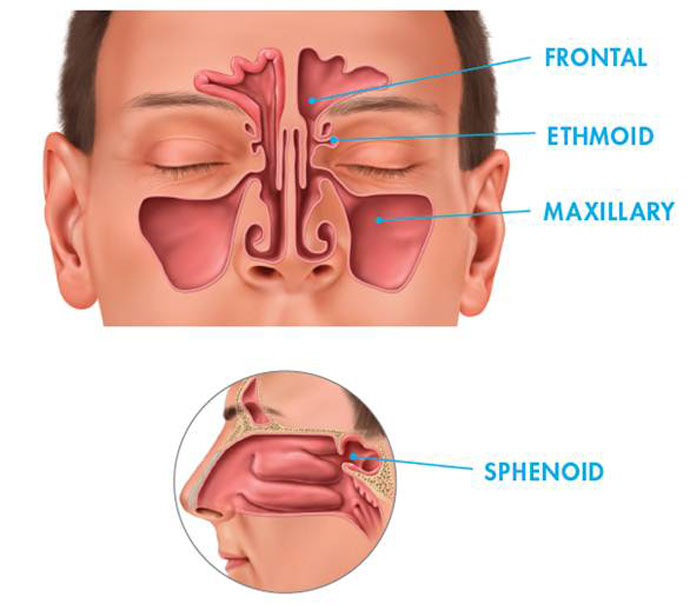
Everyone has 4 different types of sinuses: maxillary (cheekbones), frontal (forehead), ethmoid (between the eyes), and sphenoid sinuses (behind the nose). Together, they make up an interconnected web of hollow cavities. Sinuses are lightly lined with mucus and help to humidify the air we breathe in.
Any of the sinuses can become inflamed or filled with mucosal fluid, which can lead to a bacterial or viral sinus infection. Blocked sinuses usually cause facial pain and/or headaches, congestion, runny nose, and post-nasal drip among other symptoms. If you experience stuffed sinuses for longer than 6 weeks, it’s a good idea to visit an ENT.
Whether your sinus congestion is due to allergies, inflammation, or sinus infection, there are a variety of home remedies that can help you clear your sinuses.
1. Humidifier or Vaporizer
When your sinuses lack moisture, you may experience discomfort, pain, and nosebleeds. Both humidifiers and vaporizers add moisture to the air and are equally effective at relieving dry sinuses. It’s important to use the equipment properly and keep it clean before and after each use.
2. Neti Pot
Neti pots are used to irrigate the nasal cavities and help flush mucus from the sinuses. They use a saline rinse made with distilled or prepared water that is poured into one nostril and passes through the cavities, exiting out the other nostril. It’s important to keep the neti pot clean and use distilled water to prevent infection. Studies show that saline nasal irrigation improved sinus symptoms in patients with sinusitis and decreased the use of sinus medications.
3. Nasal Saline Spray
Unlike steroidal nasal sprays, nasal saline sprays are not habit-forming and can be used throughout the day to alleviate symptoms. Saline thins the mucosal secretions in the nose and sinuses helping to flush any built-up mucus and pathogens.
Contact Us
If your sinus congestion persists for longer than 6 weeks or you keep getting sinus infections, chronic sinusitis is the likely culprit. When sinuses are chronically inflamed, they stop draining properly leading to around-the-clock symptoms that are hard to treat at home.
Chronic congestion can be caused by sinusitis, a deviated septum, nasal polyps, and other conditions that cause inflammation or nasal obstruction. Visiting an ENT will help you narrow down the possibilities and get you the proper treatment.
We can help you get to the bottom of what’s causing your discomfort. Schedule your consultation with Dr Sriharsha by calling 98857 45454!
Nosebleeds, also known as epistaxis, occur when tiny blood vessels in the nose break, causing a sudden flow of blood from one’s nostrils. Nosebleeds are very common, as over 60% of people will experience at least one nosebleed in their lifetime.
What Causes Nosebleeds?
Most nosebleeds start on the nasal septum in the front of the nose, which is the wall that separates your two nostrils. Irritation can occur to the nasal septum in a variety of ways:
Allergies, especially hay fever
Vigorous nose-blowing
Genetic clotting disorders
Snorted or sprayed chemical irritants, such as drugs or medication
Medications that prevent blood clotting
Trauma to the nose
Tumors (malignant and non-malignant)
Deviated septum
Cold and dry air
Irritation to the lining of your nostrils, particularly dryness, affects the sensitive nerves in your nose, which leads to breaks in small capillaries in the area. These breaks induce blood leaks and eventually lead to nosebleeds.
How Can You Stop a Nosebleed
Once a nosebleed has started, there are at-home steps that you can take to stop your nose from bleeding.
Keep your head higher than your heart and do not lean your head back to prevent blood from draining to the back of your throat.
Gently blow any clotted blood out of your nose.
Squeeze the soft portion of the nose between your thumb and finger to close your nostrils, and wait for five to 15 minutes until the bleeding has completely stopped.
If the bleeding persists for over 30 minutes, seek medical attention. Recurring cases of nosebleeds may require further treatment, such as:
Nasal Packing
The placement of an intranasal device that applies constant local pressure to the nasal septum.
Cauterization
A technique where a blood vessel is burned with silver nitrate or a laser to stop the blood flow.
How Can You Prevent Nosebleeds?
There are a myriad of ways that you can prevent nosebleeds from happening, such as:
Keep the interior of your nose moist by applying a coat of saline gel or petroleum jelly at least twice a day
Use a saline nasal spray
Sleep with a humidifier in the winter months
Do not pick your nose
Quit smoking and avoid secondhand smoke
Contact the Ear and Sinus Institute
If you or a loved one is concerned about recurring nosebleeds or would like to learn more about prevention options, contact us at 98857 45454
Chronic sinusitis is a condition that causes the sinuses in the nasal passage to remain inflamed for an extended period of time (usually longer than three months). Chronic sinusitis can also occur if you have moderately frequent sinus infections. It is important for you to seek treatment if you suspect that you have chronic sinusitis symptoms. If chronic sinusitis remains untreated, irreparable damage could be inflicted on the. sinus cavities which could lead to decreased movement of the eyeball(s), double vision, cellulitis and meningitis.
Symptoms Of Chronic Sinusitis
There are several symptoms of chronic sinusitis that indicate a need for treatment. These symptoms could include any combination of the following:
Headaches with sinus pressure
Feelings of pressure or tightness in the face, including the nose, eyes, ears and cheeks
Obstruction of the nasal passages
Congestion or drainage in the throat and nose
Consistent and unrelieved coughing, especially during the night
Feelings of pain in the throat or teeth
An increase in asthma symptoms that were previously treated
Dizziness or fever
Halitosis, or chronic bad breath
The Challenge Of Diagnosing Your Sinus Condition.
Many patients find it difficult to self-diagnose chronic sinusitis due to the fact that many of these symptoms are indications of other sicknesses like the common cold, acute sinusitis, bacterial or viral infections, and more. If you find yourself experiencing any combination of the above symptoms, it’s important for you to contact the Sinus Institute of Atlanta to explore treatment options.
Chronic Sinusitis Vs. Acute Sinusitis
Chronic sinusitis and acute sinusitis share many of the same symptoms but have several distinct differences. Patients who have acute sinusitis are afflicted by a bacterial infection of the sinus cavities. Allergies or colds are often the cause of acute sinusitis, and patients are encouraged to visit their physician for a diagnosis and antibiotic treatment. If you feel any combination of the above symptoms for more than ten days or your symptoms worsen after they initially improve, you most likely have acute sinusitis.
Chronic sinusitis is diagnosed in patients who have many of the same symptoms as acute sinusitis, but experience them for more than three months. As opposed to a bacterial infection, chronic sinusitis is considered an inflammatory disorder due to the severity and duration of the symptoms, which will not completely resolve. Seek Treatment Balloon Sinuplasty™ is an extremely effective procedure that many patients suffering from chronic sinusitis have turned to. If you’re interested in learning more about this treatment or have additional questions, please contact us. Listen to testimonials from chronic sinusitis sufferers who underwent the Balloon Sinuplasty™ procedure.
What Are The Different Types Of Sinuses?
The term sinuses refer to hollow cavities all connected in the head. There are different types of sinuses that people can experience. Paranasal sinuses are a group of four paired air-filled pockets located in the head. The four pairs are:
Maxillary sinuses
Frontal sinuses
Ethmoid sinuses
Sphenoid sinuses
When you breathe in air, mucus in the sinuses humidifies the air and collects bacteria and pollutants. Tiny hairs lining the sinuses move the mucus (with pollutants) out of the sinus, into your throat. You then swallow the mucus, and your stomach acid destroys the bacteria and pollutants.
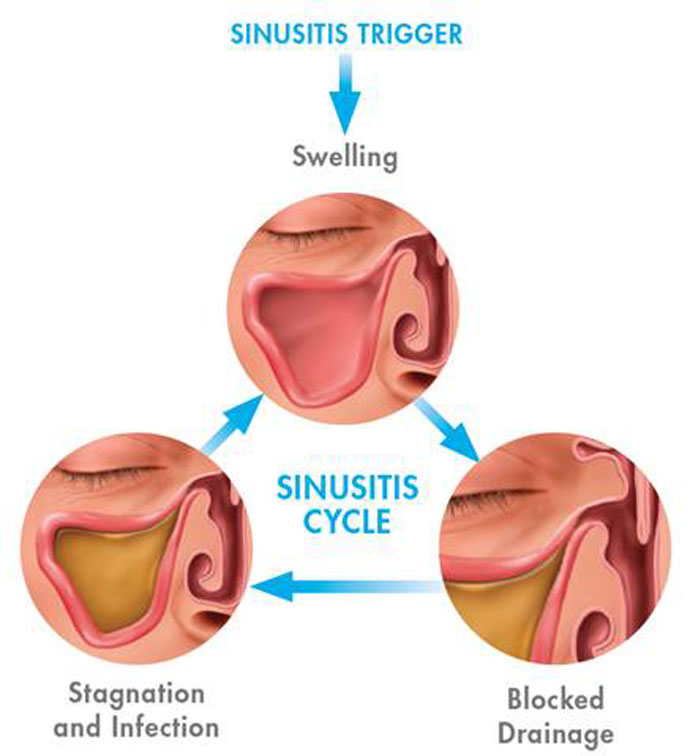
Colds, allergies, environmental irritants or other conditions can slow or block natural drainage, and irritate the sinus lining. This, in turn, can lead to swelling, additional blockage, and chronic sinusitis. Sinusitis is a common condition that afflicts over 35 million Americans every year.
In healthy sinuses, mucus drains out and the air is able to circulate. Sinusitis describes a swelling (inflammation) of the sinuses that can lead to blockages and prevent mucous from draining properly. This can lead to infection.
Chronic Sinusitis
Chronic sinusitis is a condition that causes the sinuses to become inflamed. Sinuses are hollow cavities in the skull next to the nose. Healthy sinuses drain normally into the nose through small passages called ostia. When these passages are blocked, fluid backs up into the sinus causing symptoms. Usually, the blockage is temporary and resolves within a week or so such as in the common cold or an acute allergy attack. However, sometimes, the passages remain blocked for extended periods of time resulting in chronic sinusitis.
Sinusitis is caused by an inflammation, or swelling, of the tissue lining of the sinuses. This inflammation is most commonly triggered by allergies or a bout with the common cold or influenza (flu). When the sinuses become inflamed, the glands in the sinus start secreting more mucus than normal, in an attempt to fight the allergen or virus. The extra mucus, along with the swelling, blocks the nasal passageways and prevents the mucus from draining out of the sinus cavities like it should. The small quantity of bacteria that normally live inside the nose become trapped inside the nasal cavities, the whole time multiplying rapidly. Soon there are large numbers of bacteria, and this is what constitutes a sinus infection.
The Seasonal Connection
There are multiple reasons why sinus infections are more common in fall and winter. The simplest explanation is that the most common causes of sinusitis allergies, colds and flu are very prevalent this time of year. It stands to reason then, that there will be more cases of sinusitis as well.
The first culprit—allergies can obviously be a year round problem. What makes autumn such a tough time for allergy sufferers is this is prime time for two of the most troublesome allergens: ragweed pollen and molds.
Ragweed is notorious for causing severe allergic reactions. It thrives throughout the South, and can be found growing in open fields, vacant lots and along highways and city streets. In Georgia, ragweed pollinates from late summer through November. A single plant can produce up to 1 billion pollen grains, with each grain potentially traveling up to 700 miles in the wind. One of the most common activities in autumn raking leaves can stir up ragweed pollen that has settled on the dead leaves, increasing exposure.
Mold And Other Allergens
Mold can be almost anywhere outdoors: in the soil, compost piles, rotting wood and plants. In the fall, outdoor mold levels are often at their highest. Fallen leaves often sit in yards or are raked into piles, allowing moisture to accumulate, which accelerates mold growth. Decaying vegetation from summer gardens can also become mold “hot spots.” The mold spores float in the air, much like pollen. As mold particle counts climb higher, they become increasingly irritating to people with allergies, worsening allergy symptoms.
Incidences of the cold and flu increase in fall and winter, in part, because people spend more time indoors. Inside homes, schools, stores and businesses, the air is recycled and people are in closer contact with each other, allowing contagious diseases to easily spread. Furthermore, indoor air tends to be drier particularly during cold weather when the furnace is on. Dry indoor air dehydrates the mucus membranes inside the nasal passages, which can lead to inflammation and an infection.
Outdoors, humidity levels also tend to be lower during fall and winter. This, along with the colder temperatures outside, are ideal conditions for the viability and replication of cold and influenza viruses, which best survive in low humidity, low temperature conditions. Transmission rates also increase in cold, dry weather.
The Importance Of A Proper Diagnosis
If you do start to feel sinus pain or pressure, the first and most important step to take is to get a proper diagnosis. Many people mistakenly assume they just have seasonal allergies and treat their symptoms with over-the-counter antihistamines, or they think they just have a cold that will go away by itself, when actually what they have has turned into a full-blown sinus infection.
It’s always best to get a proper diagnosis, so you can get the correct treatment. In most cases, sinusitis is easily treatable with medical therapy. Surgery is used as a last resort or for severe infections. When left untreated or undiagnosed, sinus infections can cause further complications with the nose, eyes or middle ear, lasting for months or even years.
If you suspect you have a sinus infection or if you have recurring symptoms, give us a call at 98857 45454 to request an office consultation. Whether your sinusitis symptoms are seasonal or last throughout the year, we have testing and treatment services available for patients of all ages.
A sinus infection is certainly no fun. You may have a sore throat and fever, stuffed-up nasal passages, facial tenderness, and an unbearable pain behind your eyes, cheeks and forehead. These are all symptoms commonly associated with sinus infections (sinusitis). But there’s another, slightly-less-common complaint associated with sinus infections: You may also be having trouble hearing.
But how, exactly, could a sinus infection lead to hearing loss?
First, it’s helpful to explain what a sinus infection is. Simply put, a sinus infection is a swelling, or inflammation, of the paranasal sinuses known as the sinus cavity. These are the hollow spaces located in the bones, near the nose and between the eyes. When the sinuses become inflamed, the glands in the sinus start secreting more mucus than normal, blocking the nasal passageways and preventing the mucus from draining out of the sinus cavities like it should. A sinus infection may be brought on by an allergic reaction or a bacterial, viral or fungal infection. In some cases, tooth extraction or certain dental procedures may also lead to sinusitis.
Because the sinuses are closely located beside the ear canal, when the sinuses are clogged and congested, it can also affect the ears. This blockage in the sinuses can cause the Eustachian tube (the channel which connects the middle ear to the throat and regulates ear pressure) to become swollen and blocked, sucking fluid into the ear space. This leads to pressure on the eardrum, which can result in pain and hearing loss. At the very least, sounds may seem muffled, as if coming through a long tunnel or being heard underwater. Other times, the hearing loss may be much more severe.
The good news is that in most cases this type of hearing loss is temporary: Once the sinus infection is cleared up and the fluids drain away from the nasal passages and the Eustachian tube, typically hearing is restored. However, if the sinus infection is chronic (meaning it’s persistent and lasts three months or longer) and left untreated, that can lead to other complications such as an ear infection.
If the ear infection is not cured, that can damage the small bones present in the middle ear, which can result in a number of painful or uncomfortable symptoms including tinnitus (a ringing in the ears), vertigo (a sense of loss of balance), and bleeding or rupturing of the eardrum. The worst-case scenario would be permanent and complete hearing loss.
To protect your hearing, it is critical that you seek immediate medical treatment for any type of sudden hearing loss. If the cause of your hearing problems is sinusitis, initial treatment may include medication such as antibiotics along with anti-histamines and analgesics. Steam inhalation may be recommended to relieve nasal congestion. If treated early, the risk of permanent damage to the ear can be effectively reduced. If your sinus problems are chronic or more severe, surgical treatment may be recommended.
Sinus-related hearing loss can be completely avoided by treating the sinus infection before it spreads to the ears. Sinusitis is diagnosed by physical examination of the symptoms and x-ray of the paranasal cavities. In some cases, a CT scan may be recommended to evaluate the extent of the infection. Your physician may also test the fluid in the ears to detect the type of infection and provide medication accordingly.
If the pressure and stuffiness in your sinuses persist and your hearing seems to be declining, it’s important that you consult with an ear, nose and throat (ENT) specialist or otolaryngologist. ENT physicians have the education, training and experience necessary to properly evaluate and treat hearing loss, sinus and ear infections, and even vertigo and balance disorders that often develop as a result of pressure in the Eustachian tube. Your doctor may prescribe an oral steroid medication but will also be able to perform minimally invasive procedures such as a labyrinthectomy to quickly deliver medication where it’s needed.
If you live in the Atlanta area and are experiencing sudden hearing loss, contact the Sinus Institute of Atlanta. Dr Sriharsha and his Colleagues treat all diseases of the ears, nose and throat. They’re also experts when it comes to office surgery procedures that are minimally invasive, giving you a better chance of a quick and complete recovery. Please call 988574545 today to schedule your appointment.
Pediatric sleep apnea is a sleep disorder that occurs when a child’s breathing becomes blocked as they sleep. Though people of any age can experience obstructive sleep apnea, it most commonly occurs in children ages two to six.
How is Obstructive Sleep Apnea Different in Children?
Adults can suffer from obstructive sleep apnea. However, there are some differences between how sleep apnea presents itself in adults versus children, including:
Children usually only have partially blocked airways, which means they will not typically completely stop breathing.
Children with sleep apnea wake up less often throughout the night than adults with sleep apnea.
Children with obstructive sleep apnea can have a shorter attention span than children who don’t have the disorder.
What Causes Pediatric Obstructive Sleep Apnea?
There are many causes for pediatric obstructive sleep apnea. The most common is enlarged tonsils and adenoids. Having enlarged tonsils and adenoids may not cause breathing issues during the day, but because muscle tone is decreased during sleep, the airway becomes smaller, making the flow of air more difficult.
Symptoms of Obstructive Sleep Apnea
The following are the most common symptoms of obstructive sleep apnea:
Snoring
Mouth Breathing
Bed Wetting
Restlessness During Sleep
Frequent Infections in Ear and Throat
Properly treating pediatric obstructive sleep apnea depends largely on its cause.
Consult your ENT doctor to diagnose and treat the sleep disorder.
When the weather turns cold, many people experience pain or discomfort in their ears, nose and throat. People often confuse symptoms caused by cold weather with illness or infection (or vice versa). It is important to know how cooler weather can affect your respiratory health.
Does Cold Weather Cause Ear Infections?
Contrary to popular belief, cold weather does not cause ear infections. An ear infection is caused by bacteria in the upper respiratory system that travels up the Eustachian tube into the middle ear.
Even though cold weather doesn’t cause the issue, it can make symptoms more pronounced. If you or your child are experiencing symptoms, seek treatment. Studies show that recurring ear infections can cause hearing loss.
How do you prevent cold-induced ear pain?
While you can’t prevent an ear infection from developing, you can prevent ear pain that comes from decreased blood circulation in cold weather. Whenever you’re outside, be sure to cover your ears with a winter hat or ear muffs. This will provide warmth and protect you from harsh winds.
Why Does My Nose Run?
The technical term for a runny nose caused by cold temperatures is “cold-induced rhinorrhea.” One of the functions of the nose is to warm and humidify the air we breathe in order to prepare it for the lungs. Since cold air is dry, the nose produces liquid to condition the air we are breathing and the excess moisture ends up dripping out of our nose.
Not only does breathing in produce moisture, so does breathing out. Cold air can’t hold as much moisture as warm air, so when you breathe out, the vapour in your breath condenses at the end of your nose and turns into liquid.
Can I prevent cold-induced rhinorrhea?
Since your nose becomes runny because of its natural process of warming cool air, there isn’t much you can do to prevent it. But when you enter a warm building, your symptoms should go away quickly.
Is My Sore Throat From Cold Air?
Sore throats aren’t always caused by being sick. Cold air can dry out the tissue in the throat and can cause severe irritation. Symptoms can be made worse when breathing through the mouth rather than the nose. Because of this, it is common for people to have a sore throat from cold weather after exercising.
How do I prevent throat pain from cold air?
When running, skiing or simply walking, try to remember to breathe through your nose so that moisture can be added to the air. If throat soreness does develop, it should go away soon after coming back inside.
Are Your Ear, Nose or Throat Symptoms Not Going Away?
The conditions listed above tend to go away immediately or last a day or two at most. If any of your symptoms are persisting after this period of time, it could be caused by something more serious. we will identify and treat any potential conditions to get you feeling well again.
To make an appointment with please call 98857 45454

 Sahasra ENT Hospital & Research Centre